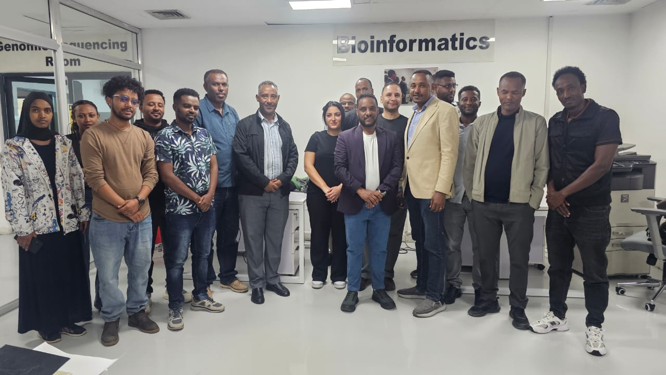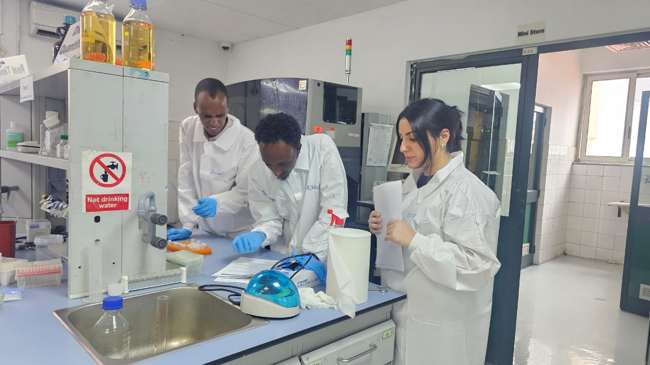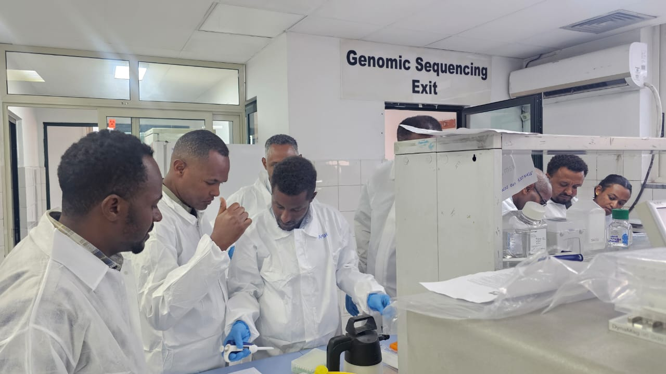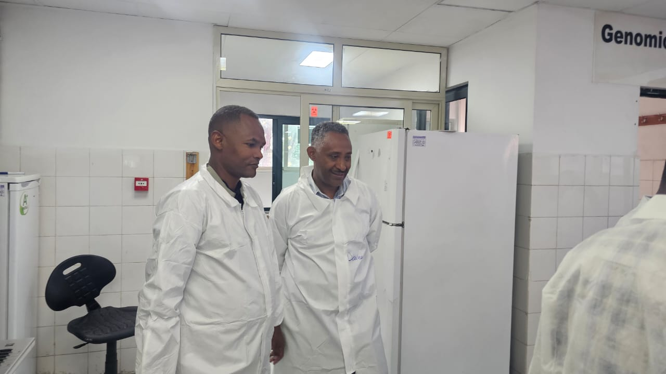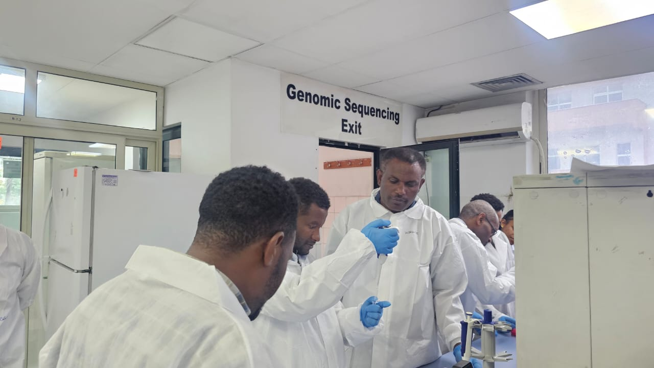
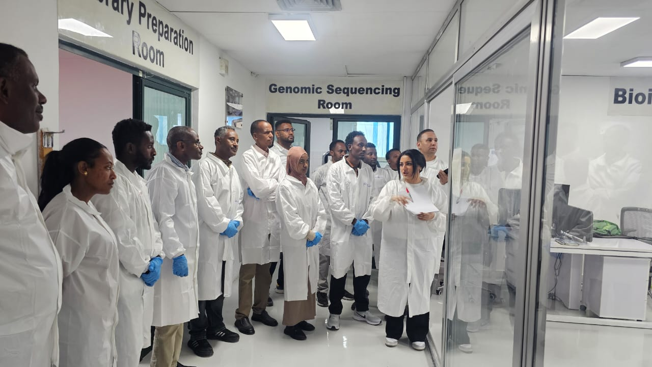

The PIONEER Project successfully conducted a hands-on laboratory training course on metagenomics at the Ethiopian Public Health Institute (EPHI) in Addis Ababa from 14–18 September 2026. The training was delivered by experts from the Technical University of Denmark (DTU), with DTU team members F and E travelling to Addis Ababa to lead the capacity-building activities.
The training was officially opened with welcome remarks from Dr. Desalegn Admassu, Principal Investigator of the PIONEER Project from Haramaya University, and Dr. Masresha Tesema, Director of the Nutrition, Environmental Health and Non-communicable Disease Research Directorate at EPHI. In their remarks, they emphasized the importance of strengthening local laboratory capacity in metagenomics for both Haramaya University and EPHI. They highlighted that building practical expertise among laboratory professionals is essential for establishing sustainable capacity within the institutions and for ensuring the successful and effective implementation of the PIONEER Project.
A total of eight laboratory professionals participated in the training, including three staff members from Haramaya University and five from EPHI. The participants are directly involved in the laboratory processing of food and other project-related samples under the PIONEER Project.
The training combined theoretical instruction with hands-on laboratory practice, providing participants with a basic understanding of the metagenomic methods and techniques planned for the project. Participants also gained practical experience in relevant laboratory procedures, while strengthening their understanding of laboratory protocols, quality standards, and biosafety requirements essential for reliable sample processing and downstream metagenomic analysis.
The capacity-building initiative represents an important step toward strengthening the laboratory component of the PIONEER Project. By developing a shared technical foundation among laboratory teams from Haramaya University and EPHI, the training will support the consistent application of agreed procedures and standards and contribute to the successful implementation of the project’s planned metagenomic analyses.
The collaboration between Haramaya University, EPHI, and DTU also demonstrates the value of institutional partnerships in building sustainable technical capacity and strengthening Ethiopia’s ability to apply advanced genomic approaches in foodborne disease surveillance and research.